Is the NAATI Test Difficult? 7 Proven Tips to Easily Pass in 2025
The NAATI CCL (Credentialed Community Language) Test is an essential certification for individuals looking to secure extra points for their Australian PR application. Many aspirants wonder, “Is The NAATI Test Difficult?” The answer depends on your language proficiency, preparation, and understanding of the test format.
What is the NAATI CCL Test and Why It Matters for PR in Australia
The NAATI CCL (Credentialed Community Language) test is a language assessment designed for bilingual candidates applying for Australian PR. It evaluates your ability to translate everyday and professional dialogues between English and a language other than English (LOTE). The NAATI CCL Test assesses your ability to interpret and translate conversations between English and your chosen language. The test consists of two dialogue recordings, each containing segments of spoken English and the LOTE (Language Other Than English). You must accurately convey the meaning in both languages while maintaining fluency and coherence.
The NAATI test grants candidates an additional 5 points in their PR application. This can be crucial for the candidate’s skilled migration visa application. NAATI CCL tests conversations that take place in communities and covers aspects like health care, education, and social services. At PSA Study, we see most students attempt the test with confidence and a practical approach. This most certainly makes the preparation easier. By focusing on fluency, accuracy, and cultural context, candidates can significantly improve their performance.
Start your NAATI preparation today with PSA Study and secure your PR points!
Whether you’re preparing for NAATI CCL Tamil, Malayalam, Telugu, or Hindi, PSA Study provides flexible online coaching to help you pass on your first attempt.
Why Is the NAATI Test Difficult for Some Candidates?
While The NAATI Test is not extremely difficult, certain factors can make it challenging for test-takers:
- Time Pressure – You need to respond promptly to each dialogue segment within a given time.
- Pronunciation & Accent – Understanding different accents in English and LOTE can be tricky.
- Note-Taking Skills – Effective note-taking is crucial to retaining key details of dialogues.
- Common Errors – Omissions, misinterpretations, and grammatical mistakes can lead to low scores.
7 Proven Tips to Easily Pass the NAATI Test in 2025
Passing the NAATI CCL exam requires more than just being fluent in two languages. The test evaluates your ability to accurately interpret conversations while maintaining meaning, tone, and context. By following these seven proven strategies, you can improve your performance and increase your chances of passing on the first attempt.
1. Understand the Test Format
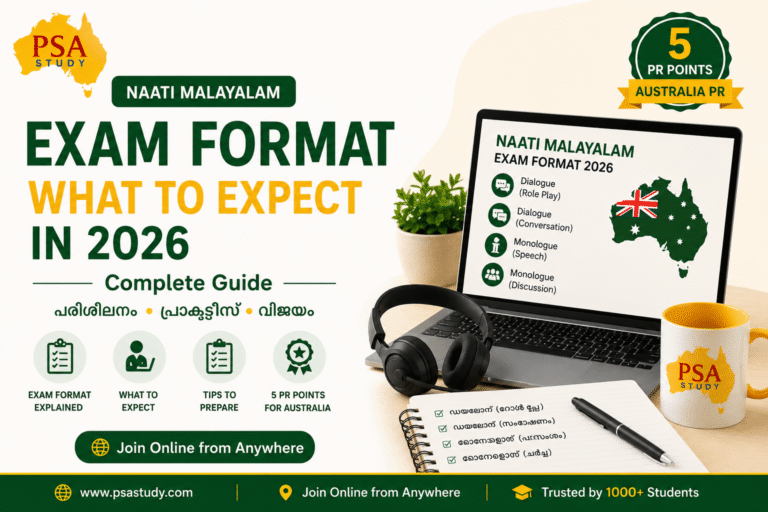
One of the biggest mistakes candidates make is starting preparation without understanding how the exam works. The NAATI CCL exam consists of two dialogues where you must interpret between English and your native language. Knowing the scoring criteria, question format, and common topic areas helps you prepare more effectively and avoid surprises on exam day.
Key areas to understand:
- Exam structure and marking criteria
- Pass mark requirements
- Common topics such as healthcare, legal, education, and community services
- Time management during interpretation
2. Improve Your Listening and Speaking Skills
Strong listening and speaking skills are essential because you’ll need to understand information quickly and communicate it accurately. The exam may include different accents, speaking speeds, and formal vocabulary. Regular exposure to English and your native language can improve comprehension and fluency.
To strengthen these skills:
- Listen to English podcasts and news channels daily
- Practice speaking in both languages
- Engage in bilingual conversations
- Record yourself and review your pronunciation
3. Develop Effective Note-Taking Techniques
Good note-taking can significantly improve your score. During the exam, you will hear information only once, so writing down key details helps you remember important points. Effective notes should be short, clear, and easy to understand when interpreting.
Focus on recording:
- Names and locations
- Dates and numbers
- Important instructions
- Keywords instead of full sentences
The goal is to capture essential information without spending too much time writing.
4. Enroll in NAATI CCL Coaching
While self-study can be effective, coaching provides structured guidance and expert feedback. Experienced trainers understand common mistakes and can help you improve your interpreting accuracy. Coaching programs also provide realistic mock tests and study materials aligned with the actual exam format.
Benefits of coaching include:
- Personalized feedback
- Access to mock tests
- Structured study plans
- Faster improvement in weak areas
5. Practice with Mock Tests
Mock tests are one of the most effective ways to prepare for the NAATI CCL exam. They simulate the actual testing environment and help you become comfortable with the format. Regular mock testing also allows you to identify weaknesses and track your progress over time.
When taking mock tests:
- Follow real exam conditions
- Avoid pausing recordings
- Review mistakes carefully
- Monitor your scores and improvement
Candidates who take regular mock tests often feel more confident on exam day.
6. Practice with Real-Life Dialogues
The NAATI CCL exam is based on practical conversations commonly encountered in Australia. Practicing with real-life dialogues helps you become familiar with the vocabulary and scenarios that may appear in the exam. This also improves your ability to interpret naturally and accurately.
Common dialogue topics include:
- Hospital and healthcare appointments
- Legal consultations
- School and education discussions
- Immigration and community services
- Employment and workplace communication
The more real-world dialogues you practice, the more comfortable you’ll become with the exam content.
7. Build Confidence with Expert Feedback
Confidence plays a major role in exam performance. Many candidates know the correct answers but lose marks due to nervousness or hesitation. Receiving regular feedback from trainers or experienced candidates helps you identify errors and improve your interpreting skills.
To build confidence:
- Practice consistently
- Review recorded sessions
- Learn from mistakes
- Take mock tests regularly
- Seek feedback from experts
As your accuracy improves, your confidence will naturally increase. By combining expert feedback with consistent practice, you’ll be better prepared to handle the pressure of the NAATI CCL exam and maximise your chances of success.
Common Mistakes That Make the NAATI Test Difficult
Many candidates assume that being fluent in two languages is enough to pass the NAATI CCL exam. However, even proficient bilingual speakers can lose marks because of common interpreting mistakes. Understanding these errors and avoiding them during preparation can significantly improve your chances of success.
1. Adding Unnecessary Words or Changing Meaning
One of the most common reasons candidates lose marks is altering the original message. During the exam, your role is to accurately interpret what the speaker says, not to add personal explanations, opinions, or extra information. Even small changes can affect the meaning of a sentence and result in mark deductions.
For example, if the speaker says, “You need to attend the appointment next Tuesday,” and you interpret it as “You should probably attend the appointment next week,” the meaning has changed. Accuracy is more important than sounding sophisticated.
To avoid this mistake:
- Focus on conveying the exact message.
- Avoid adding extra details.
- Listen carefully before interpreting.
- Practice accuracy over speed.
2. Missing Cultural Context in Translations
The NAATI CCL exam often includes conversations related to healthcare, education, legal services, and community support. Some terms and concepts may not have direct translations in another language. Candidates who translate word-for-word without considering cultural context may confuse the listener or lose important meaning.
A good interpreter understands both languages and cultures. Instead of translating mechanically, they communicate the intended meaning while keeping the message accurate and natural.
To improve cultural understanding:
- Learn common Australian terms and services.
- Practice real-life NAATI dialogues.
- Build vocabulary related to healthcare, education, and legal topics.
- Understand how concepts are expressed in both languages.
3. Weak Note-Taking Skills
The NAATI CCL exam requires you to remember information from spoken dialogue segments. Candidates who try to rely only on memory often forget names, dates, numbers, addresses, or key instructions. Weak note-taking can lead to omissions and inaccurate interpretations.
Effective note-taking helps you capture essential information quickly without writing full sentences. The goal is to record keywords and symbols that help trigger your memory during interpretation.
Good notes should include:
- Names and locations
- Dates and times
- Numbers and amounts
- Important instructions
- Key vocabulary terms
Developing strong note-taking techniques can significantly improve accuracy and confidence during the exam.
4. Inconsistent Practice
Many candidates start preparing enthusiastically but fail to maintain a regular study routine. Practicing only once or twice a week is usually not enough to build interpreting fluency and confidence. Like any skill, interpreting improves through repetition and consistency.
Candidates who practice daily tend to perform better because they become familiar with exam-style dialogues, improve vocabulary retention, and strengthen their listening and speaking abilities over time.
To maintain consistent preparation:
- Follow a daily study schedule.
- Practice at least 30–60 minutes each day.
- Take regular mock tests.
- Review mistakes after every practice session.
- Focus on weak areas and track your progress.
Avoiding these common mistakes can make the NAATI CCL exam much easier and increase your chances of passing on the first attempt.
PSA Study emphasises practical exercises, frequent feedback, and error correction to overcome these pitfalls.
Why Many Students Fail the NAATI Test (And How to Avoid It)
Most failures occur due to lack of preparation or exam anxiety. Students often:
- Ignore mock tests
- Study irregularly
- Focus on memorization instead of comprehension
Avoid these by following a daily study plan, taking regular mocks, and learning from experts. PSA Study’s coaching programs address all these areas efficiently.
Why PSA Study is the Best Choice for NAATI Coaching in Australia?
PSA Study offers:
- Experienced trainers with proven NAATI success
- Tailored study plans for each student
- Mock tests and exam simulations
- Flexible online/offline coaching
- Focus on 5 PR points for Australian skilled migration
With PSA Study, the NAATI test becomes less stressful, more structured, and highly achievable.
If you’re taking the test in NAATI CCL Tamil, NAATI CCL Malayalam, NAATI CCL Telugu, or NAATI CCL Hindi, a daily practice schedule and guided coaching can make a huge difference.
Learn more about NAATI CCL coaching in Sydney.
Student Success Stories
Frequently Asked Questions (FAQs)
Is the NAATI Test Difficult for beginners?
The NAATI CCL test can be challenging for beginners because it requires interpreting skills, note-taking, and bilingual fluency. However, with proper preparation and regular practice, most candidates can develop the skills needed to pass.
What is the pass mark for the NAATI CCL exam?
Candidates must score at least 63 out of 90 marks to pass the NAATI CCL exam. The test consists of two dialogues worth 45 marks each.
Can I pass the NAATI test without coaching?
Yes, many candidates pass through self-study. However, coaching can provide structured guidance, mock tests, and expert feedback that may improve your chances of success.
How long does it take to prepare for the NAATI test?
Most candidates need between 3 and 6 weeks of preparation, depending on their language proficiency, interpreting skills, and daily study routine.
What are the most common reasons candidates fail the NAATI test?
Common reasons include poor note-taking, lack of mock test practice, inaccurate interpretation, limited vocabulary, and inconsistent preparation.
Is the NAATI test easier than IELTS?
The two exams assess different skills. IELTS focuses on English language proficiency, while NAATI CCL tests interpretation between English and another language. Many bilingual candidates find NAATI easier than IELTS.
How many times can I take the NAATI CCL exam?
There is no fixed limit on the number of attempts. Candidates can retake the exam if they do not achieve the required passing score.