Daily Study Plan for PTE Academic 2025: Step-by-Step Guide

Table of Contents
ToggleStudy Plan for PTE Academic is one of the most important factors in achieving your target score. Many candidates spend months preparing for the exam but fail to see significant improvement because they study without a clear structure. A well-organized Study Plan for PTE Academic helps you focus on the right tasks, manage your time effectively, and track your progress consistently.
Whether you’re taking the PTE Academic test for Australian Permanent Residency (PR), university admission, or professional registration, following a daily study routine can make your preparation more efficient. Instead of randomly practicing different question types, a structured Study Plan for PTE Academic ensures that you dedicate enough time to Speaking, Writing, Reading, and Listening while improving your overall English skills.
The PTE Academic exam is fully computer-based and AI-scored, which means accuracy, consistency, and familiarity with the exam format are essential for success. Candidates who follow a proven Study Plan for PTE Academic often perform better because they understand how to balance skill development, mock tests, vocabulary building, and time management.
In this guide, you’ll find a practical Study Plan for PTE Academic designed specifically for students and PR applicants in Australia. We’ll cover a beginner-friendly 7-day routine, daily practice strategies, common preparation mistakes, and expert tips to help you maximize your score. By following this study plan consistently, you can stay motivated, avoid burnout, and move closer to achieving your desired PTE result.
This is your step-by-step PTE practice guide so that you can study every day without burning out.
What is the PTE Academic Exam?
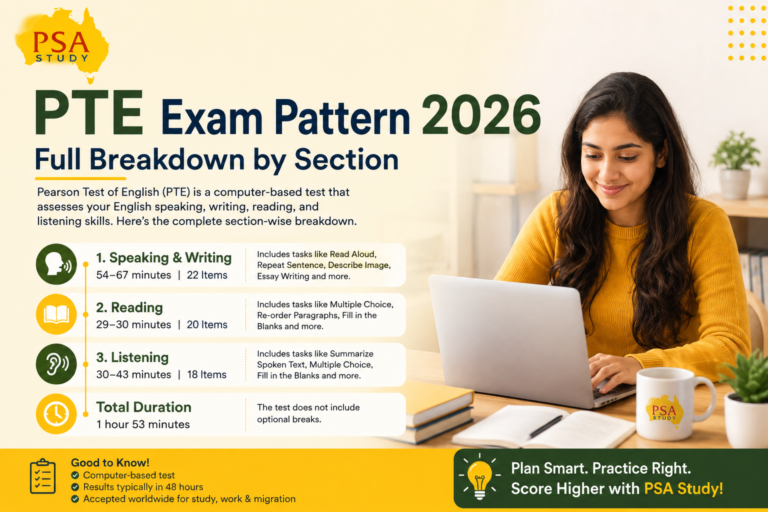
The PTE Academic is a computer-based English language proficiency test accepted by Australian universities, colleges, professional bodies, and immigration authorities. It evaluates your ability to communicate effectively in English through four core skills: Speaking, Writing, Reading, and Listening.
Unlike traditional paper-based exams, PTE Academic is entirely computer-delivered and AI-scored. This automated scoring system provides fast, consistent, and unbiased results, making it one of the most popular English tests for students and migration applicants. Most candidates receive their results within 48 hours, allowing them to plan their next steps quickly.
The exam is designed to assess real-life English communication skills and includes a variety of question types that test both individual and integrated language abilities. For example, some tasks require you to listen, read, and respond simultaneously, reflecting situations you may encounter in academic or professional environments.
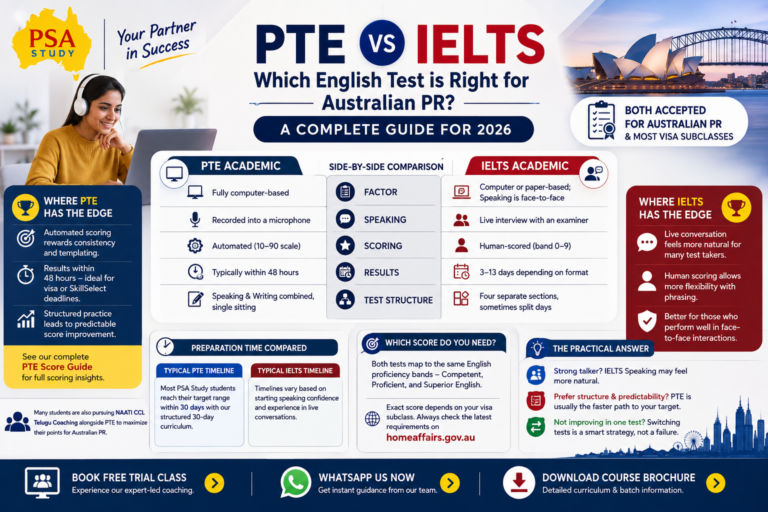
For applicants seeking Australian Permanent Residency (PR), the PTE Academic exam can play a significant role in the migration process. Depending on your score and visa category, a strong PTE result can contribute valuable points toward your PR application. This makes the exam an important investment for many migrants looking to improve their chances of receiving an invitation to apply.
Whether your goal is university admission, professional registration, student visa requirements, or Australian PR, understanding the PTE Academic exam format is the first step toward creating an effective study plan and achieving your target score.
For applicants to PR in Australia, the PTE score can add a tremendous 20 points to your PR score making the score highly valuable for your immigration PR process.
Why You Need a Daily Study Plan for PTE
The PTE exam tests four core skills Speaking, Writing, Reading, and Listening – In an integrated, fast-paced format. A scattered approach won’t work. A structured daily plan ensures:
- Balanced preparation across all modules
- Regular practice and feedback
- Better time management
- Higher chances of success on your first attempt
7-Day PTE Study Plan: Sample Routine
Here’s a beginner-friendly weekly plan. You can adjust it based on your current level and test date.
Day 1: Speaking + Vocabulary
- Practice:
- Read Aloud (10 items)
- Repeat Sentence (15 items)
- Work on pronunciation, fluency, and pace
- Learn 10–15 new academic vocabulary words
- Record yourself and listen for mistakes
Tip: Use tools like PSA Study’s mock portal or apps to get instant feedback.
For detailed strategies and tips to improve your speaking skills, visit PTE Speaking Tips
Day 2: Writing
- Practice:
- Summarize Written Text (2 tasks)
- Essay Writing (1 task)
- Focus on structure: introduction, body, conclusion
- Time yourself (20 mins for essays)
- Review grammar and sentence variety
Tip: Evaluate your essay using the PTE scoring format (Content, Form, Grammar, Spelling, Vocabulary, and Written Discourse)
Improve your writing skills and get scoring strategies from PTE Writing Tips by Pearson
Day 3: Reading
- Practice:
- Fill in the Blanks (Reading & Reading + Writing)
- Reorder Paragraphs
- Skim texts for keywords and main ideas
- Practice reading under time pressure
Tip: Keep a vocabulary notebook , PTE academic texts are dense.
For effective strategies to improve your PTE Reading skills, check out PTE Reading Tips.
Day 4: Listening
- Practice:
- Summarize Spoken Text
- Highlight Correct Summary
- Write from Dictation
- Summarize Spoken Text
- Improve note-taking techniques
- Practice spelling and grammar under pressure
Tip: Listen to Australian/UK news podcasts to build comprehension speed.
For practical tips and strategies to improve your PTE Listening skills, visit PTE Listening Tips.
Day 5: Mock Test + Review
- Take a full-length PTE mock test
- Analyze results: Which sections need work?
- Review only your mistakes today
- Practice those weak tasks again
Tip: PSA Study provides real exam-style mock tests with AI-based evaluation.
Day 6: Focus on Weak Areas
- Spend extra time on your lowest-performing section
- Watch PTE tips on YouTube or PSA Study’s portal
- Ask a mentor or coach for feedback
Day 7: Light Revision + Strategy
- Revise templates (Essay, Describe Image, Summarize).
- Revisit common vocabulary.
- Meditate or relax , don’t overwork on Sundays.
- Visualize test-day flow and build confidence.
Additional Daily Habits for PTE Exam
- Spend 1 hour daily reading newspapers or journals
- Speak in English with a friend or record a daily journal
- Review vocabulary flashcards before bed
- Limit distractions, no multitasking during PTE prep time
Bonus Tips for PTE Academic Preparation in Australia
- Take mock tests weekly
- Use AI-powered PTE practice platforms for instant scoring
- Enhance your everyday English by reading and reviewing Australian journals and newspapers.
- Maintain a daily study journal to record your daily progress.
Common Mistakes to Avoid in PTE Preparation
- Neglecting the weaker sections (Most learners tend to focus more on Speaking/Writing).
- Practicing without the consideration of a time framework.
- Over-relying on free resources at the expense of professional coaching.
- Failing to take mock examinations in conditions that simulate a real test.
- Neglecting Australian vocabulary and accent training.
How PSA Study Can Help You Stay on Track
If you’re unsure where to begin or feel stuck in your prep, PSA Study offers expert-led online coaching to help you achieve your target score faster.
- Live interactive sessions
- Mock tests with real-time feedback
- Personalized study plans
Visit PSA Study’s PTE Online Coaching Page and start preparing with confidence.
Final Thoughts
Your success in the PTE exam depends not just on hard work, but on smart planning. Follow this daily study schedule consistently, and don’t hesitate to seek expert help when needed. With the right guidance and regular practice, scoring 79+ is absolutely within reach.
Importance of Enabling Skills in PTE with Tips and How they Affect the Overall Score in PTE Exam?
FAQs about PTE Coaching in Australia
The best study plan for PTE Academic includes daily practice for Speaking, Writing, Reading, and Listening, along with weekly mock tests and regular performance reviews.
Most candidates should study between 2 and 4 hours daily, depending on their current English proficiency and target score.
Yes. With a structured study plan and consistent practice, many candidates successfully prepare for the PTE Academic exam within 30 days.
Many students find PTE easier because it is computer-based, AI-scored, and provides faster results. However, the difficulty level depends on individual strengths and preferences.
The required score varies depending on your visa category and immigration pathway. Higher PTE scores can help you earn additional PR points.
It is recommended to take at least one full-length mock test every week to assess your progress and identify weak areas.
The most difficult section varies by candidate. Many students find Speaking and Listening challenging because they require quick responses and strong concentration.
Yes. Self-study is possible with quality resources and regular practice. However, coaching can provide expert guidance and personalized feedback.